
Loaded Objects
Using objects to access stories and curiosity

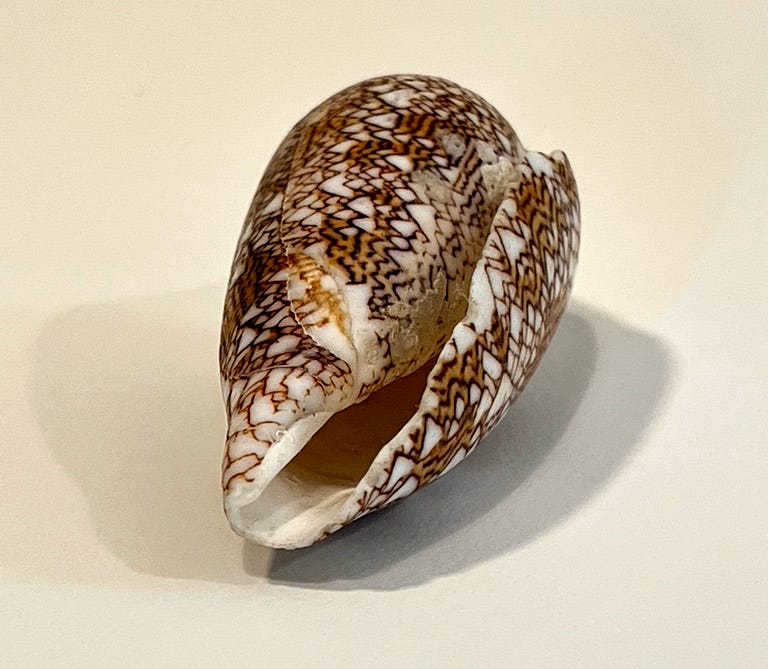
Loaded Objects
The objects we surround ourselves with are loaded with memories, questions, and experiences. We just need to slow down and carve out some time to notice.
What you need:
An interesting object from your life
Some tools to make pictures
Curiosity
Instructions:
Select an object. Nab an object from your immediate surroundings, something visually interesting and that you have history with.
Brainstorm. Write about your object. Everything you can think of - memories, associations, people, places, etc... Where did the object come from? What is it made of? How was it made? Does it make you nostalgic, angry, sad, worried, bloated, goated? Is it valuable? What does it feel like, smell like, taste like?
On and on.
You get the idea.Research. Reflect on what you don’t know and what you would like to find out about the object. Once you’ve identified knowledge gaps and questions… research!
Here are some suggestions:Head to Wikipedia (a great place to start).
Talk to someone you know about your object.
Travel to the place where the object came from.
Contact an expert (online, by phone, or in person).
Check under every rock in the garden (you never know).
Note: Writing down initial ideas and impressions before jumping into research is a good way to identify your own misconceptions and knowledge gaps. Adding research to comics often grounds personal anecdotes in a meaningful way, helping expand appeal beyond the author’s immediate opinions and feelings and bring in new knowledge, ideas and perspectives.Organise your ideas. Comb through your notes and start to play with the most interesting bits. Hold new facts up to old assumptions, see how an anecdote changes when look at it through an interview, see if your insights flatten as they fall toward cold, hard reality! Keep your eyes peeled for contradictions, surprise, big feelings, gut reactions, fun things to draw, and terrible, horrible, nauseating love affairs!
Or, just, like, look for interesting bits to connect together in your comic.
Note: A common (and fairly useful) vehicle for this kind of graphic research is to start with a personal anecdote to draw your reader in. Then, once interest is piqued, change direction and bring in some research. Then, as the comic sidles toward completion, bring the reader back to something personal and round the story off by reflecting on what your comic might mean.Note about this note: The meaning DOES NOT have to be profound, just true. Better to have more questions, or for things to be complicated, or to not know than to strangle a good story with something convenient and cute.
Make your comic. Use your object as the primary visual subject. Work however you want, but here are a few suggestions in case you love long winded, overly perscriptive instructions:
Try using a grid and breaking up your writing a bit, leaving some panels empty for images and paying close attention to the rhythm of the text.
Don’t worry about having a complete script, a loose sense of where your headed is enough. Just start out in a clear direction and see where it goes.
Keep it playful and lean on abstraction, pattern, colour, and process. Use image fragments, change scale, change orientation, repeat images, can an image or pattern be used as a focus in one place and a background in another?
Basically, try to use the visuals you make in as many different ways as you can.Try working in a different way than you usually do and see what happens.
Here are some less-than-typical comic making materials you might try:
Photography, collage, brush and ink or watercolour, mixed media, cyanotype, old school diorama, high school diorama, public pool drama, the blood of a llama, etc…
Aaaaaaaand… GO!
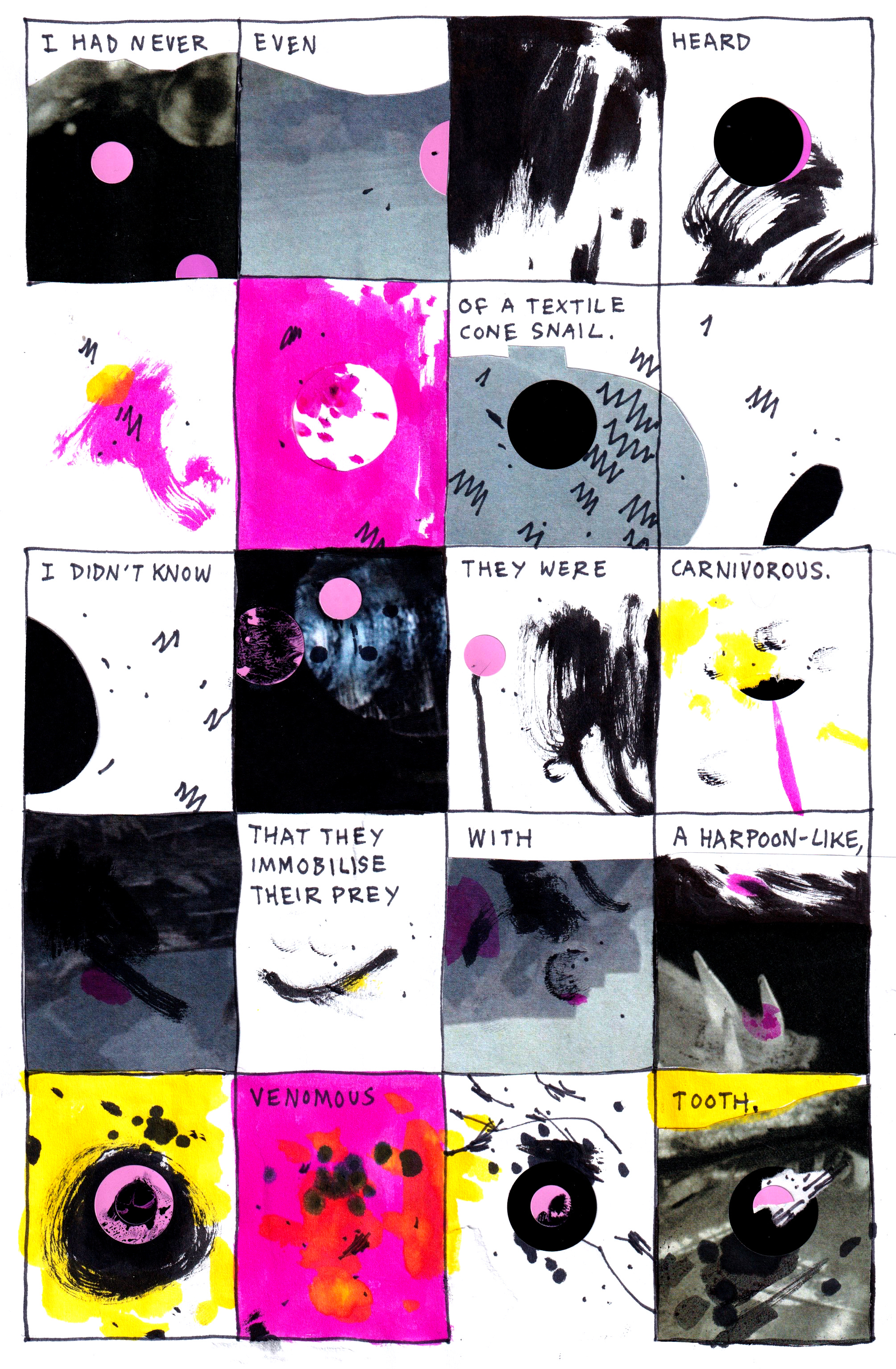
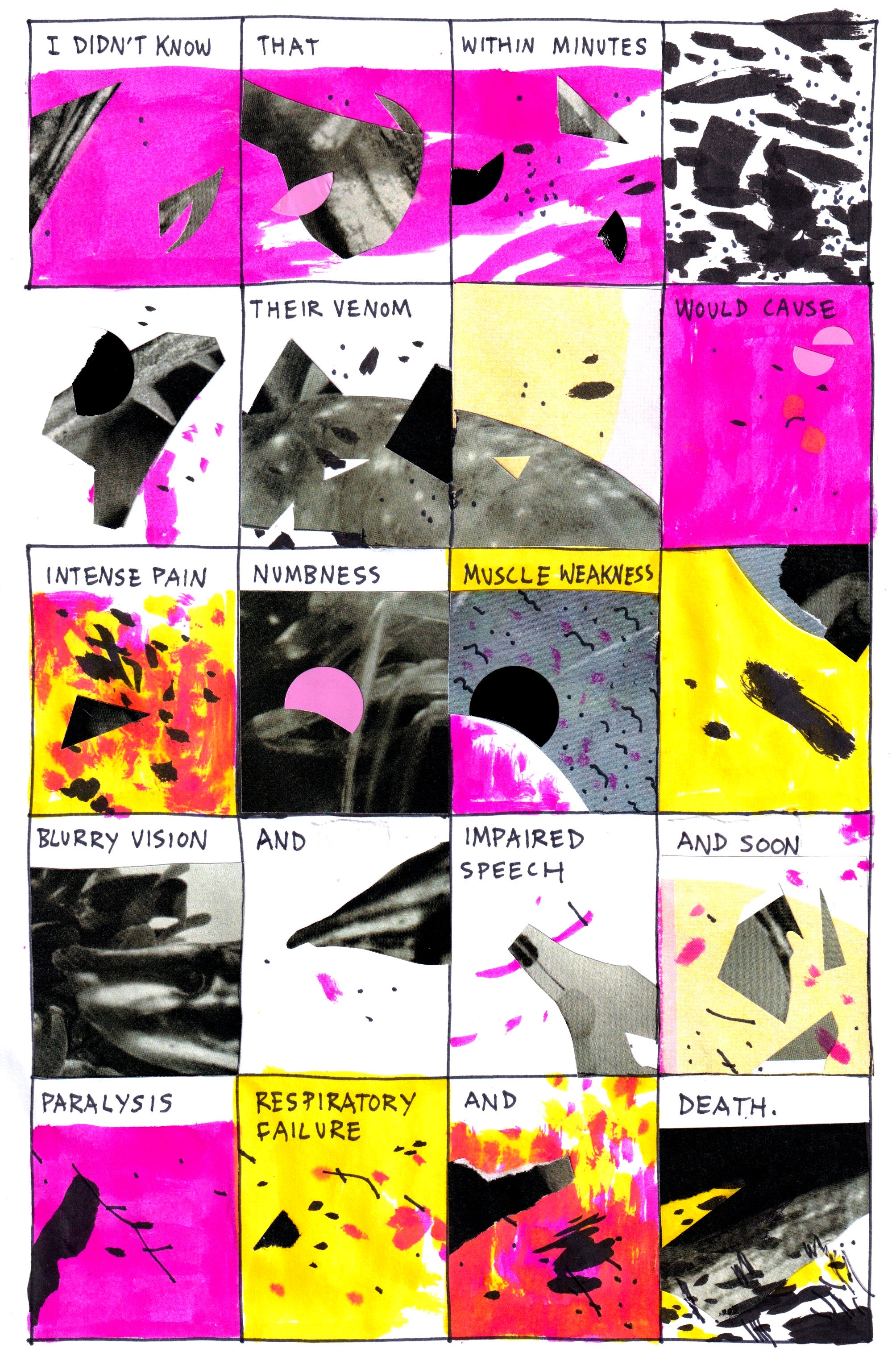
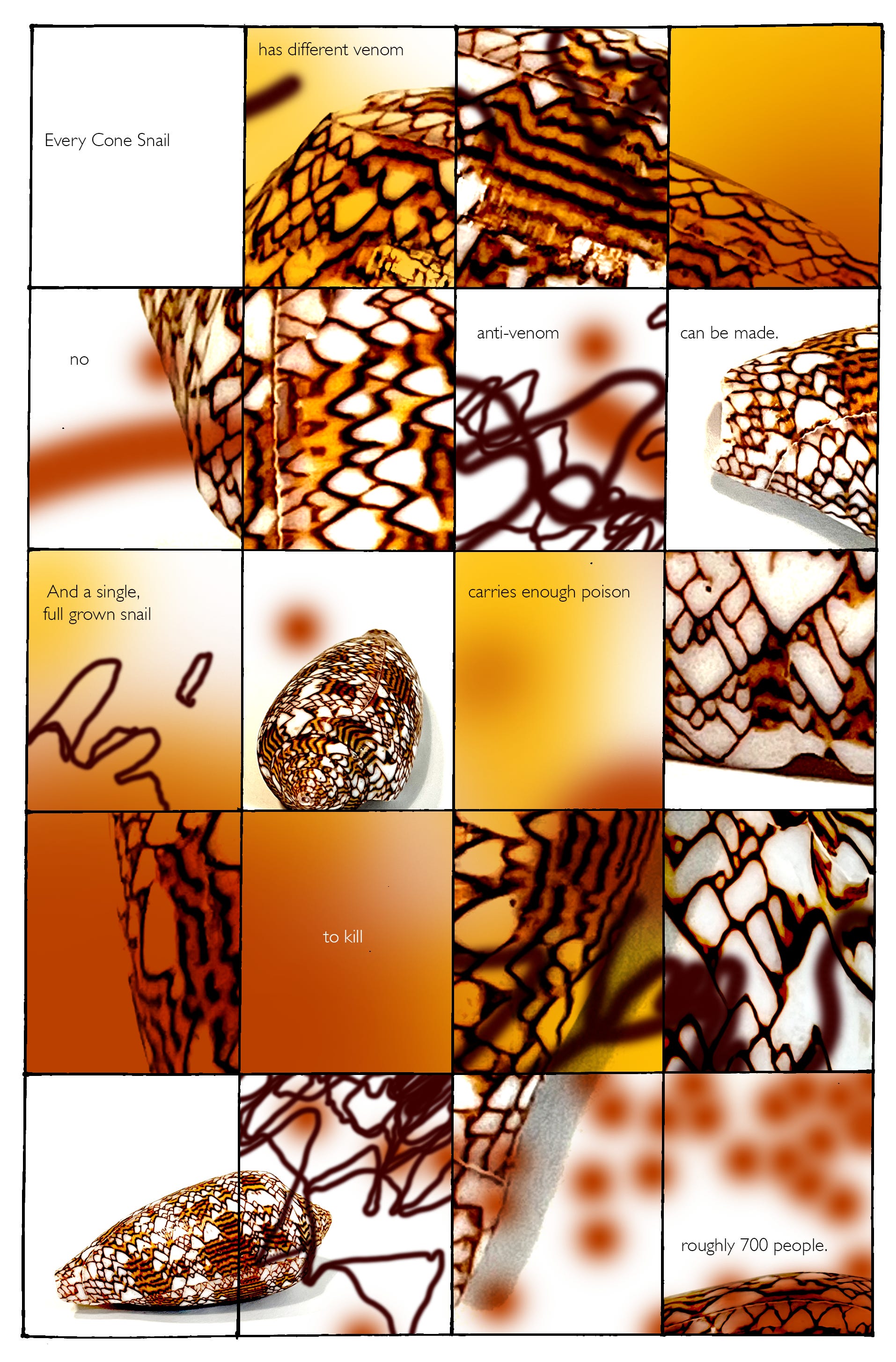
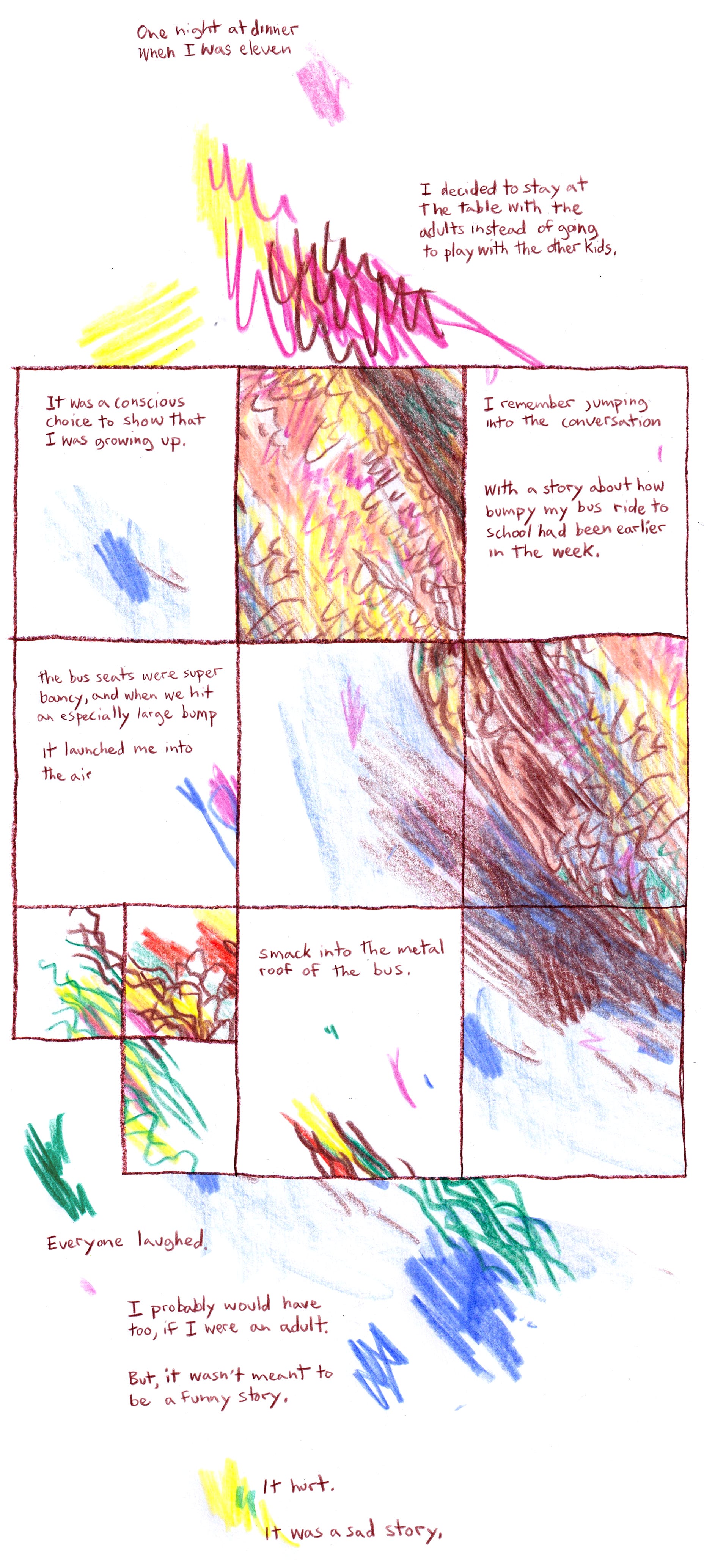
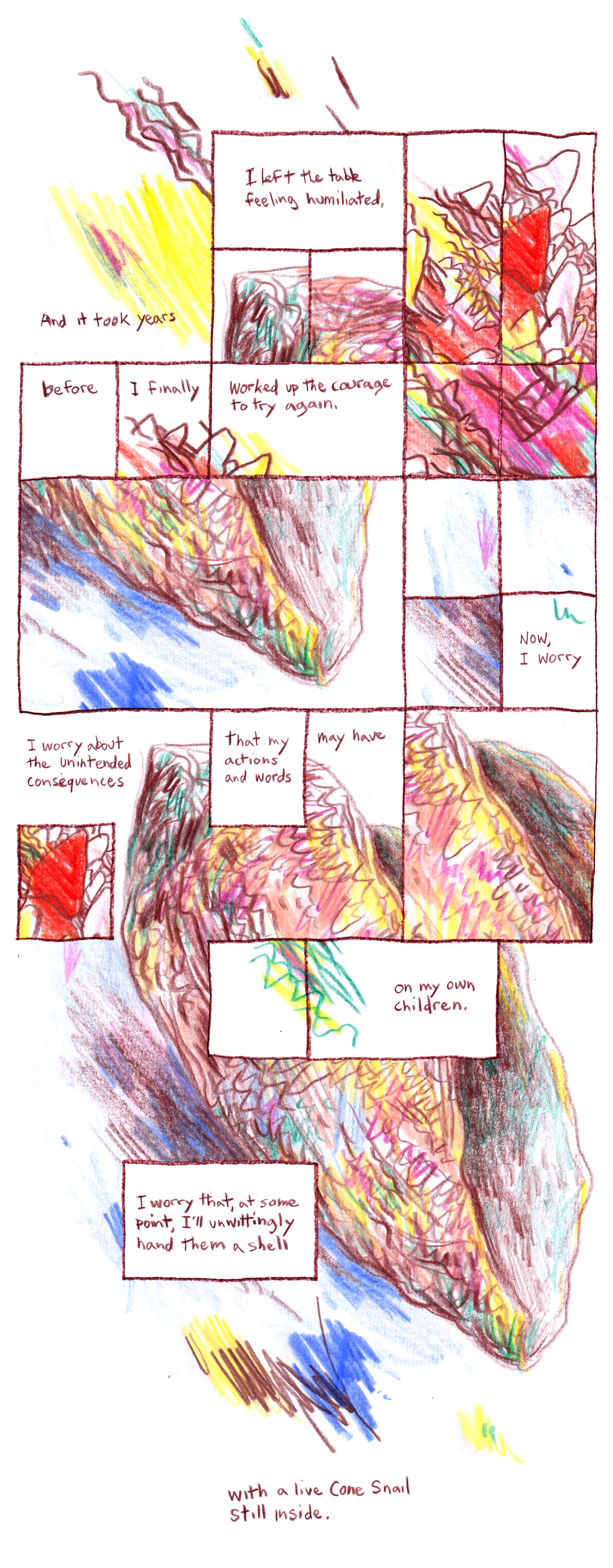
Materials:
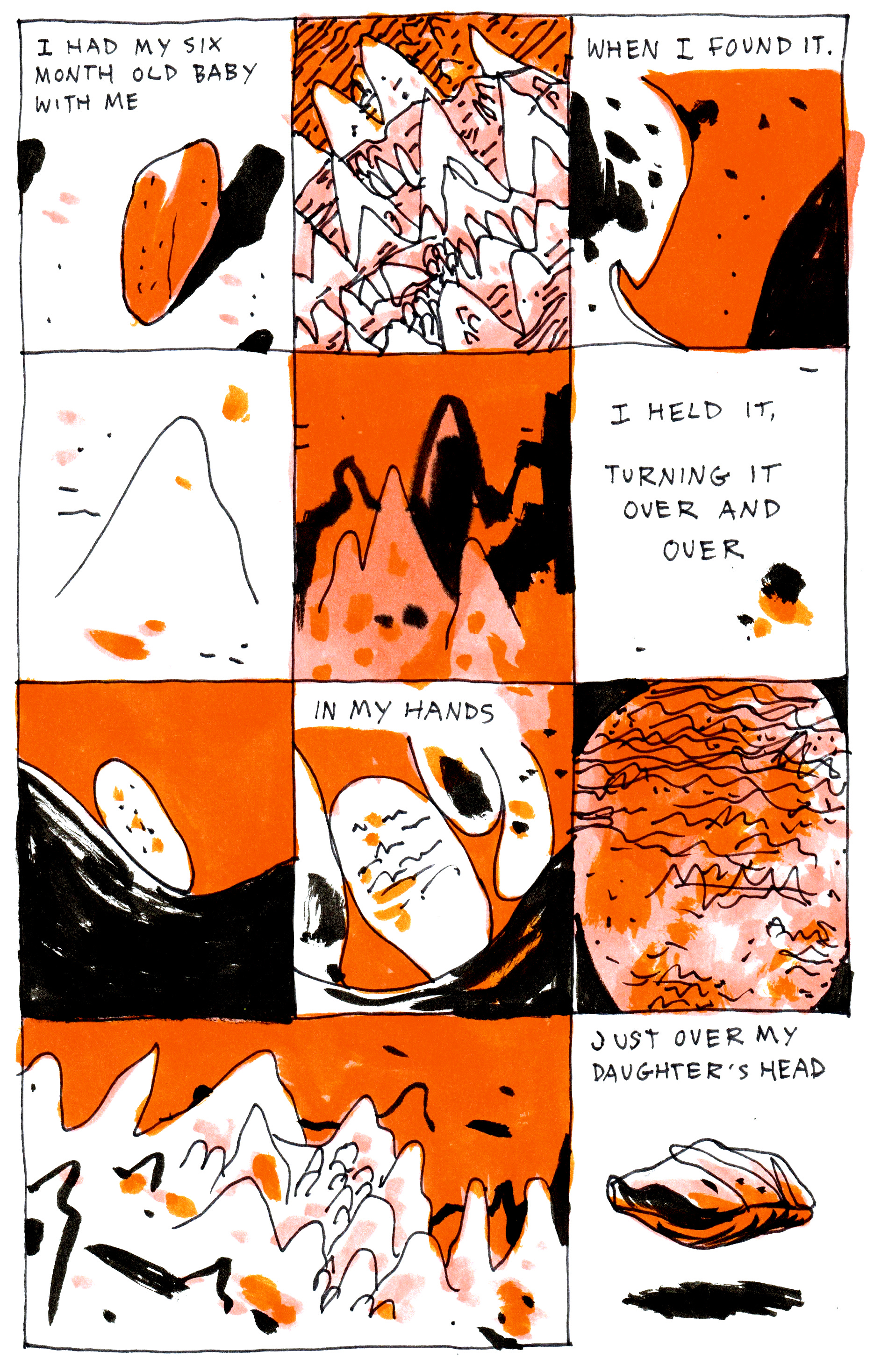
Pages 1, 2 and 3: Black and orange brush pens and a pen.
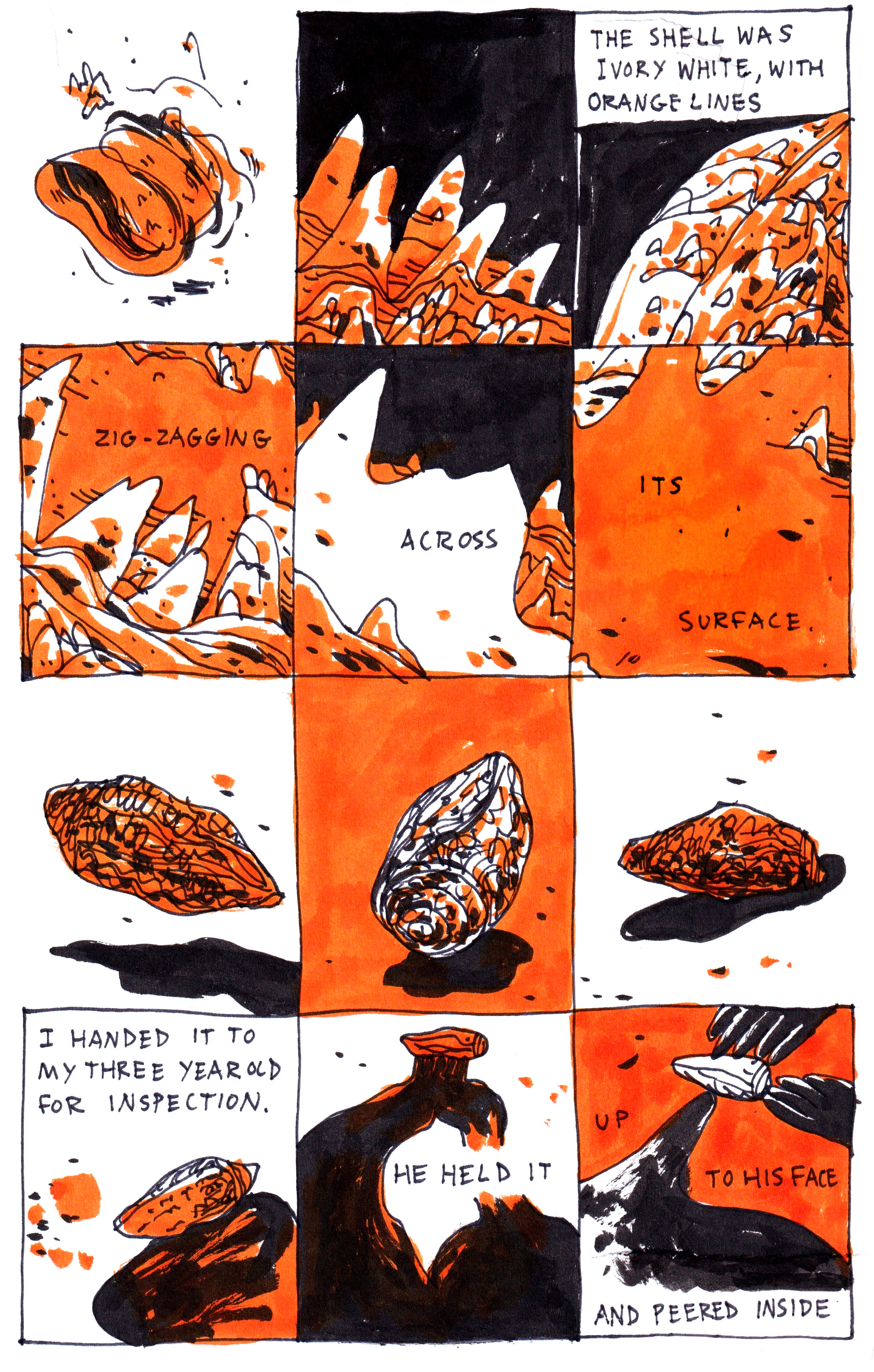
Pages 4 and 5: Photo collage, brush pen, white Diaso post-it notes, glue and pen.
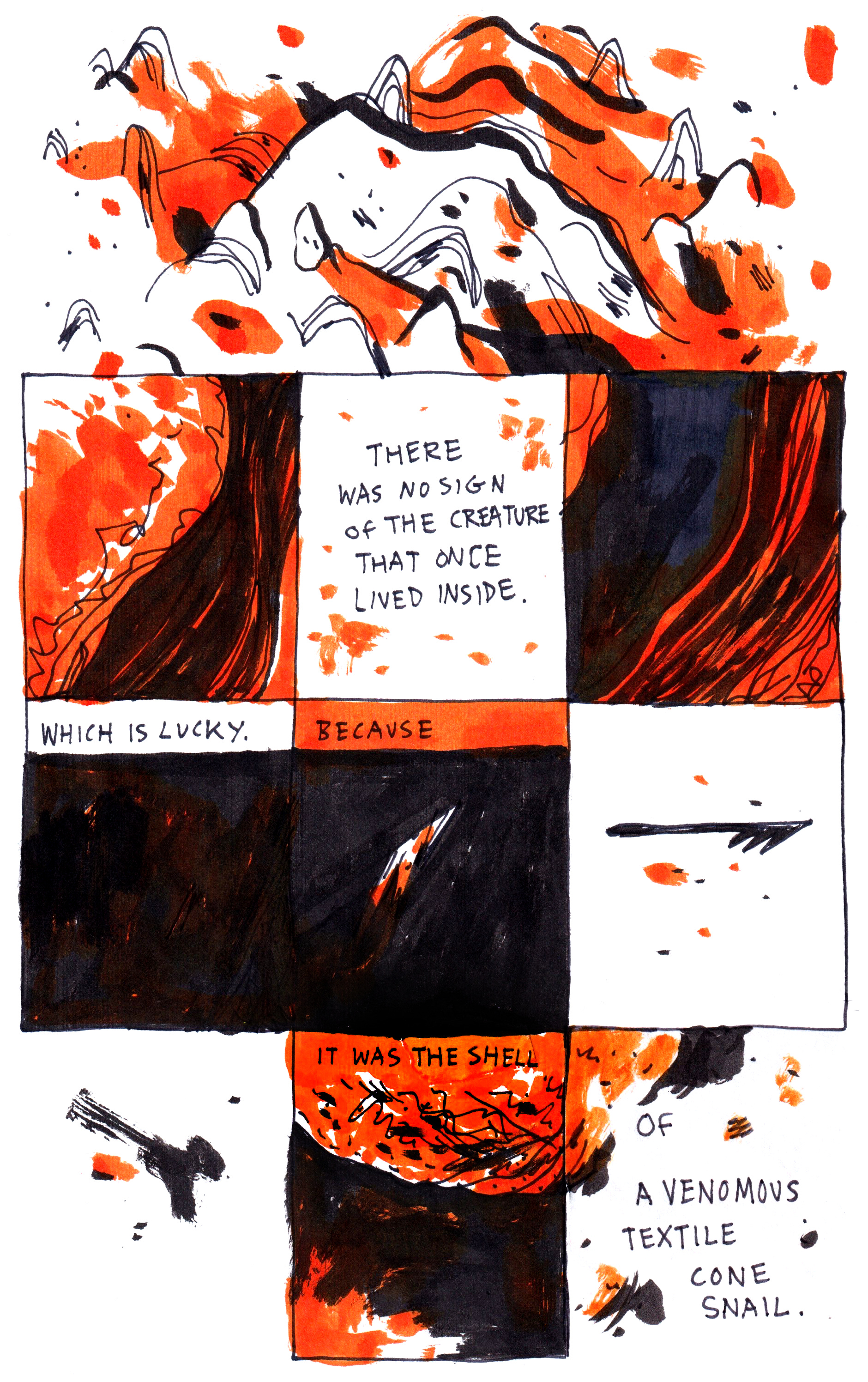
Page 6: Photos and digital gradients and Photoshop blurry brush.
Pages 7 and 8: Coloured pencil.
Thoughts:
I love the idea of a “loaded object”. I first heard the term back in art school during an artist talk. The artist (whose name I have completely forgotten now) described growing up in Cuba and how, when something broke, his family would have no choice but to fix it. If he and his siblings broke a table leg, it would be re-glued and reinforced with whatever they had to hand. A broken bowl… reassembled! Hole in a jacket… patched! Torn pillow… re-stuffed and sewn up! Years later, looking around his home, he could read his family’s history in every dent and imperfection.
Taking the time to look at the objects in our lives and think about their history and our relationship to them can unlock memories in a similar way to particular sounds and smells, giving us access we didn’t know we had.
Before I had a cell phone, I used to keep a scrap book of phone numbers. If I met someone at a party, I’d take down their details on whatever I could - a receipt, a train ticket, the corner of a magazine, coaster - before pasting it into my scrap book. Looking through the book later, the paper that the numbers were written on would always jog memories about the person I’d met or the situation I was in when I met them.
All of this is to say, if you want to be a storyteller, I highly recommend becoming a hoarder.
Actually, don’t do that.
Unless you are hoarding money… for me?
Actually don’t. If you are hoarding money for me, stop it… and send it to me!
Right. Anyway.
This exercise is directly inspired by an assignment created by my dear friend, Gabe Clark, as part of a Visual Communications subject he coordinates. In Gabe’s course, the brainstorming and research steps are the start of a much longer, research driven process. Students are asked to communicate research related to their object in three different mediums: motion design, photography, and comics (which I teach).
The exercise I wrote (above) was made to kick start student projects, to get the them making SOMETHING. Once they get past the “blank page” and have something (literally anything) to improve upon, things get cooking. The reason my comic above is in four mediums/styles is that I didn’t want the students to feel like they needed to make traditional comics or work with any particular material or style.
If I have time (tbh, sometimes when I don’t have time), I like to dip my toes into the assignments I give my students. When I do, three things happen:
I realise that what I am asking the students to do is really difficult and that there are a thousand different ways to do the assignment. A thousand ways is too many ways! With so many options, it’s difficult to get started… hence this exercise… which is probably still too broad.
I discover things I didn’t know about the assignment - parts of the process that are confusing or unclear. This, of course, helps me to clarify them.
I get totally sucked into the project and can’t stop working on it. It’s reassuring to know that the homework I’m assigning CAN actually be fun.
So that’s the story of this exercise and the weird comic experiment above.
Hooray for clarity!
My university job kicked in three weeks ago and I’ve been wildly busy and... I miss posting on here!
I just finished up the second SAW Low Pressure Comics Class. Thank you so much to all the lovely people that took that! I’ll be making a post with some of the exercises made during the class as soon as I can elbow out a bit of room to try them myself.
I have an event coming up on Weds the 25th with Lee Lai in Sydney. If you’re in town, please come! We’ll both be reading comics and chatting as a part of the launch tour for Lee’s new book, Cannon. Surprising absolutely no one, Lee has written and drawn another beautiful book. It’s amazing.
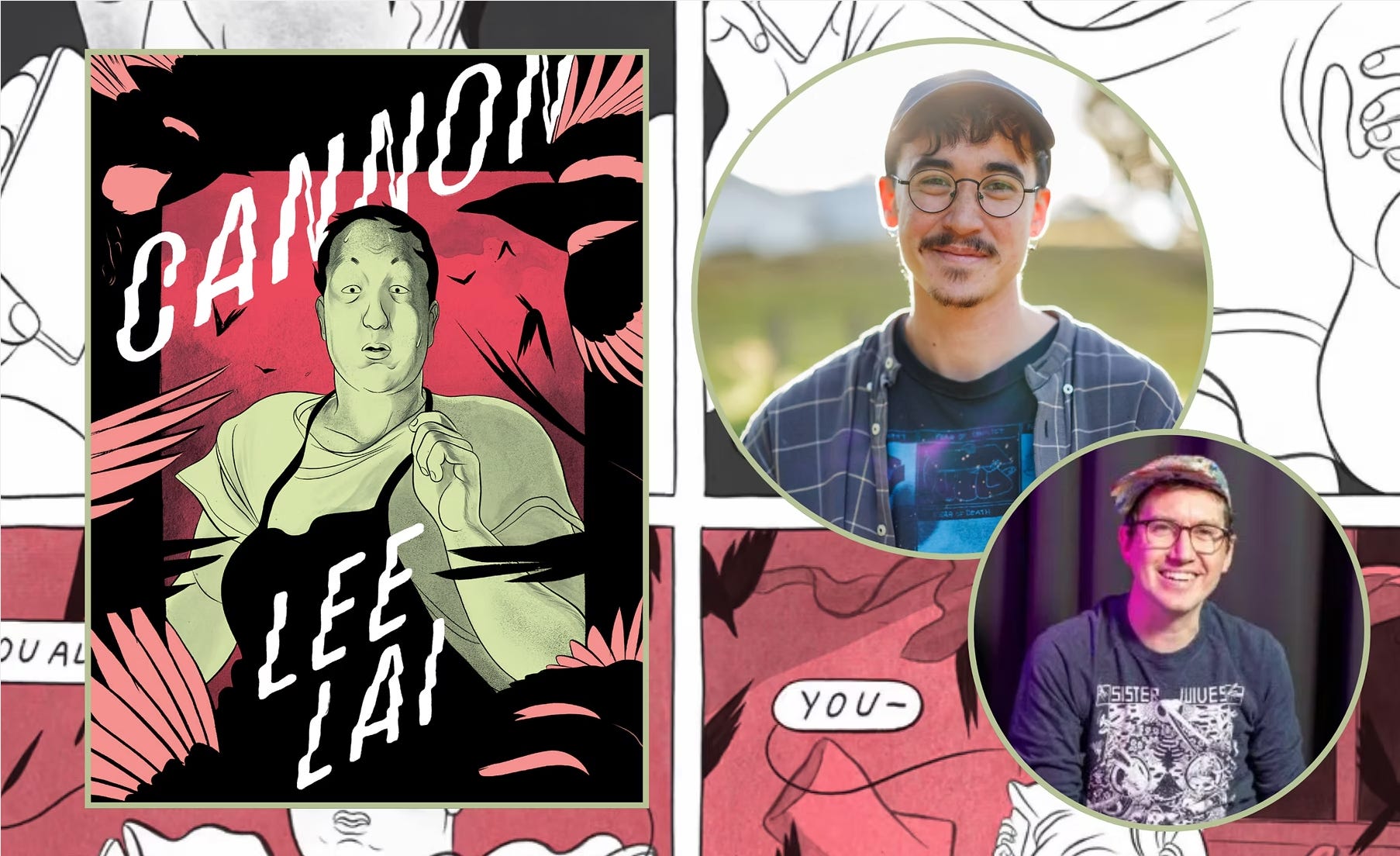
Lee is so thoughtful and wonderful and fun. I can’t wait. Please come if you can!
I have some other fun stuff in the works that I’m keen to share… but later. LATER!
Thanks for sticking around! So appreciate your support.
Excited to post more frequently again in the near future.
xo
f
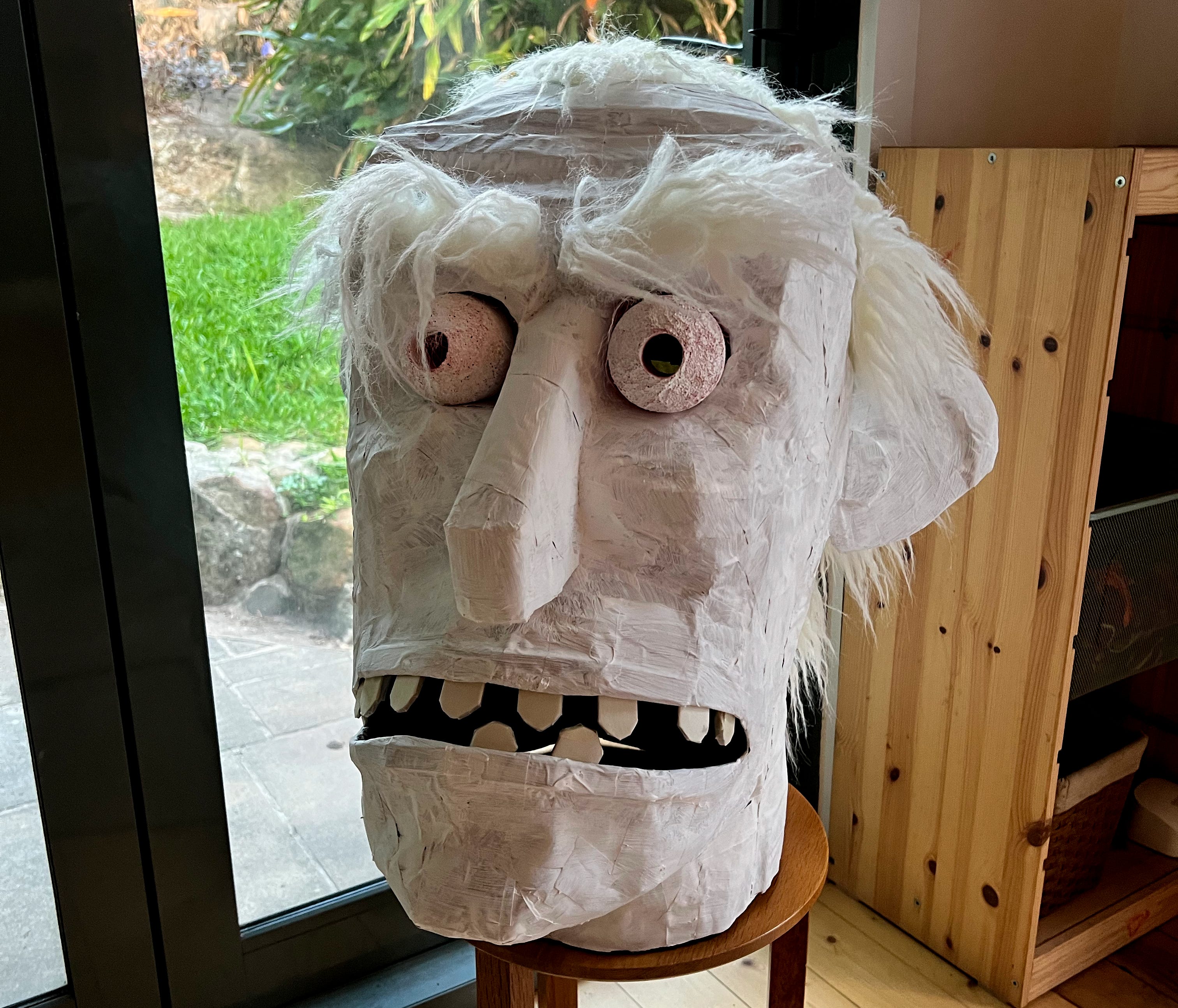
PS. I made this giant head for a life drawing class I’m teaching. I love when teaching feels like everyone - the students and me - are all getting away with something, especially something as goofy as this.
You worry about snails? And not the GIANT CREEPY HEAD in the living room??? Your kids will be scarred for life! ;)
Is it okay to use the body of a coyote? I live in California and we don’t have hyenas here (to my knowledge). I love your comics. Thanks for the inspiration.