
Offset Narrative
Emergent meanings and converging timelines

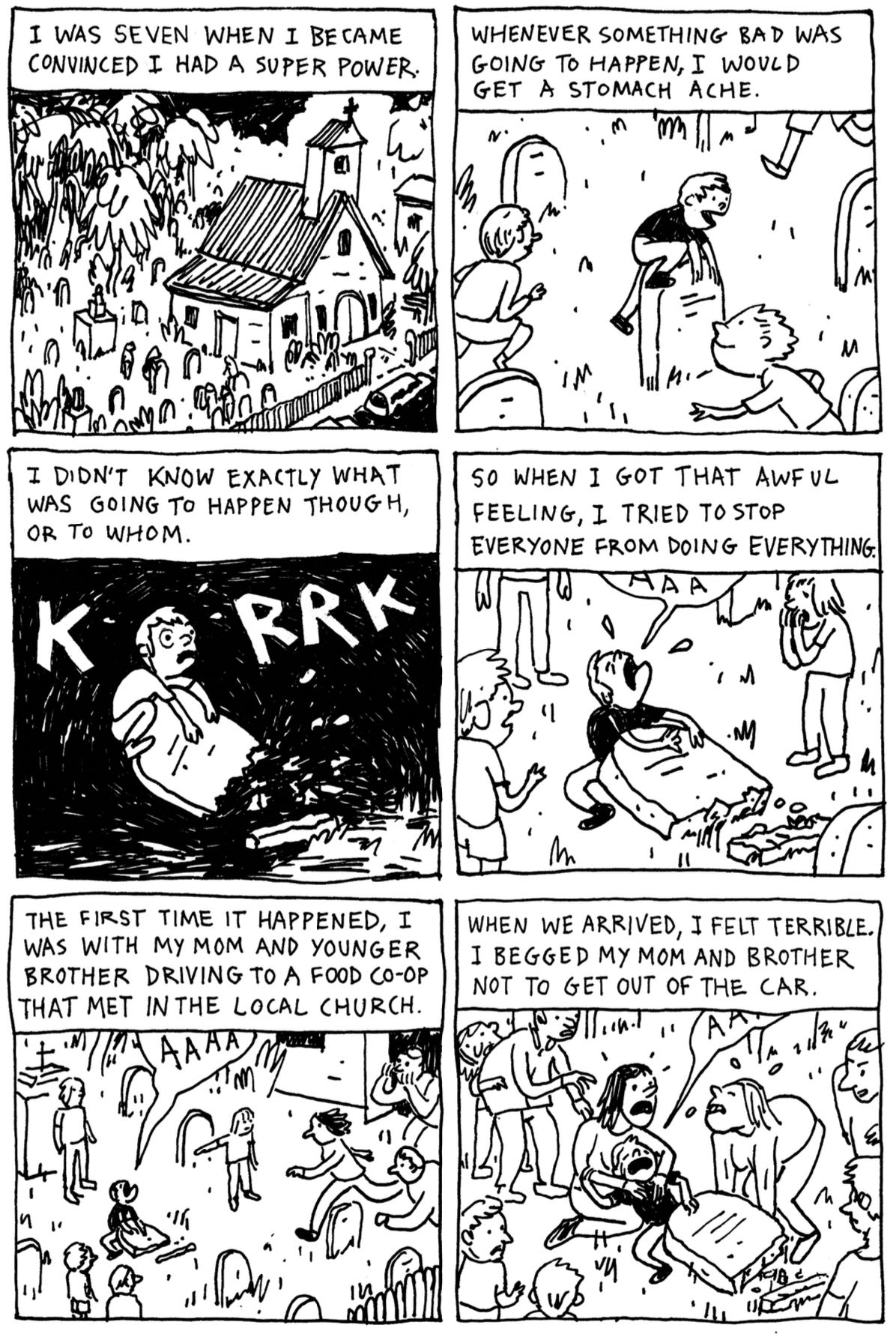
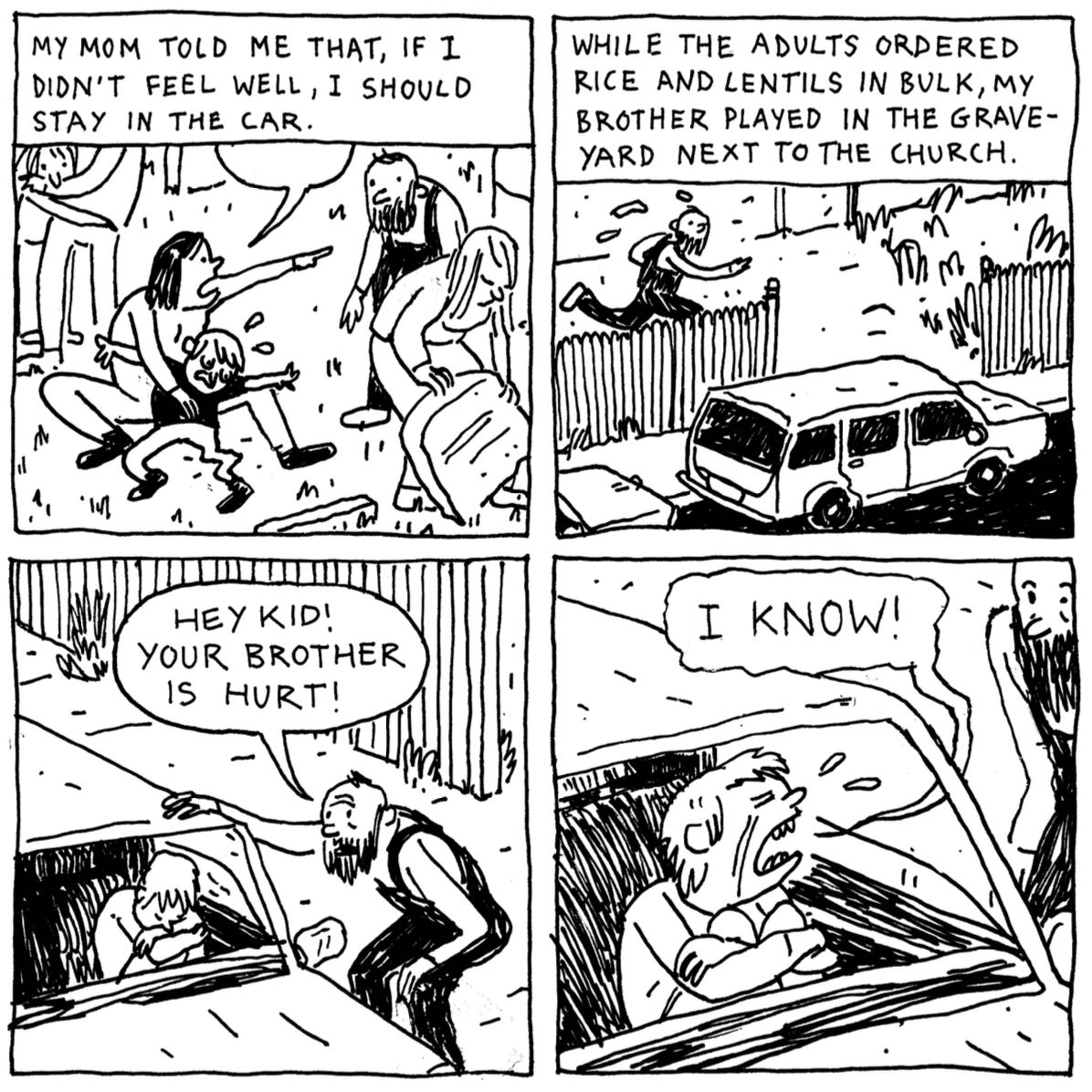
Offset Narrative
Similar to Parallel Narrative, text and image are decoupled here, creating an interesting contrast and conversation between the two, however, in this exercise, the textual and visual layers slowly converge over time.
What You Need:
The usual (Post-It Notes, paper, pen or pencil)
What To Do:
Think of a situation or childhood memory about which you have strong feelings.
Write out what happened as a sequence of events in bullet points. Include only actions and dialogue.
Using your bullet points as a guide, draw a short comic on Post-It Notes that includes all the visual information needed to convey the situation. You can include dialogue if you want to, but no narration.
Stick the Post-It Note panels down in order on a piece of paper, leaving a bit of space above each panel to use later for text. When you are done, put your comic to one side.
Now write about how that same situation in your comic made you feel and why it stuck with you. Write a bit about why this event was meaningful to you.
Okay, now, rewrite that brainstorm so that you describe the lead up to the event in your comic in a meaningful way, with the event only occurring at the end of the narration.
Or, conversely, write about the aftermath of the event and work your way back, again with the event only appearing in the narration at the end.Use this writing as narration in your comic. See if you can keep the narration and the situation shown in the comic from connecting until the end of the story. Ideally the tension between the two narratives (the narration VS the visuals/dialogue) slowly resolve into a single narrative/idea by the end of the comic, but not before then.
Rejig, rewrite, redraw as needed.
Thoughts:
The goal of this exercise is to create a comic in which the narration and events depicted visually happen at two different times; one in the present, and one in the past or future. The trick though, is not letting the reader in on that knowledge, keeping them working to make connections between the textual and visual layers until the very end. Hopefully, when things finally click into place, there is a satisfying payoff.
I like having to work as a reader, I like having to piece things together and build meaning, so long as that hard work is rewarded.
The End
The comic that made me think of this exercise was a bit in Charles Forsman’s comic, I Am Not Okay With This, in which the protagonist is speculating about how her best friend is probably haveing a great time in the narration, but her best friend is having a very different experience. It’s such a fantastic, devestating moment.
His comics are great.
Why are there so many good comics in the world?
Why can’t I make someone else’s work instead of my own?
Why do I bother making things when there are so many good things in the world already?
Why am I so grumpy?
Can you tell I’m getting over a cold?
I love you?
xo
f
hahahahahah gonna text you before every flight i catch from now on to make sure there are no stomach aches
Brilliant as always - I recommend your Substack to my comics students every week!